On April 21, 2026, in Hanoi, the Ministry of Industry and Trade (MOIT), in collaboration with the Danish Energy Agency and the Embassy of Denmark, organized a technical workshop titled “Demonstration energy audits in thermal power generation and cement industries” under the Vietnam - Denmark Energy Partnership Program for the period 2020 – 2025 (DEPP3).
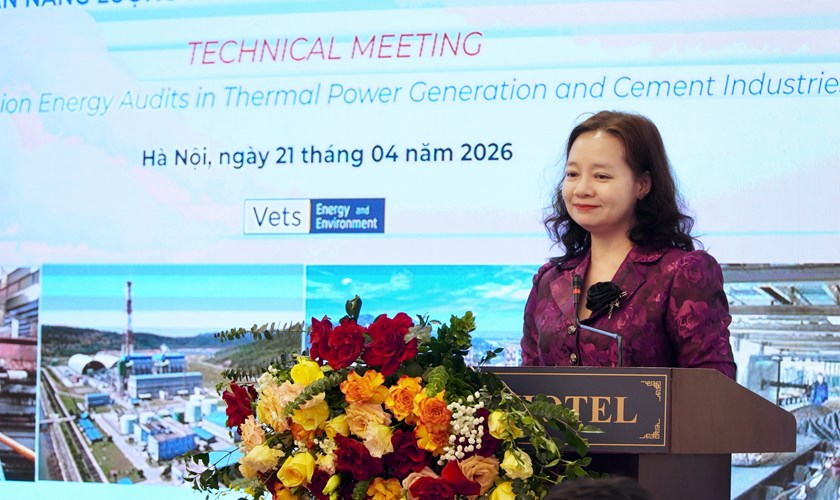
In her opening remarks, Ms. Nguyen Thi Lam Giang, Director General of the Agency for Innovation, Green Transition, and Industry Promotion (IGIP), emphasized the role of energy audits in these two key industries: “Energy audit is considered an important technical solution and the first step for enterprises to gain a clear picture of their energy consumption, thereby identifying opportunities and potential for energy savings. Particularly for the thermal power generation and cement industries,… energy audit becomes even more essential to optimize energy use within plants”.
Ms. Nguyen Thi Lam Giang, Director General of IGIP, delivers the opening speech.
The demonstration reports presented at the workshop clarified methodologies and practical techniques for conducting energy audits in accordance with international standards, applied to two largest energy-intensive industries in the economy.
Energy consumption profile in thermal power generation via energy mapping technique
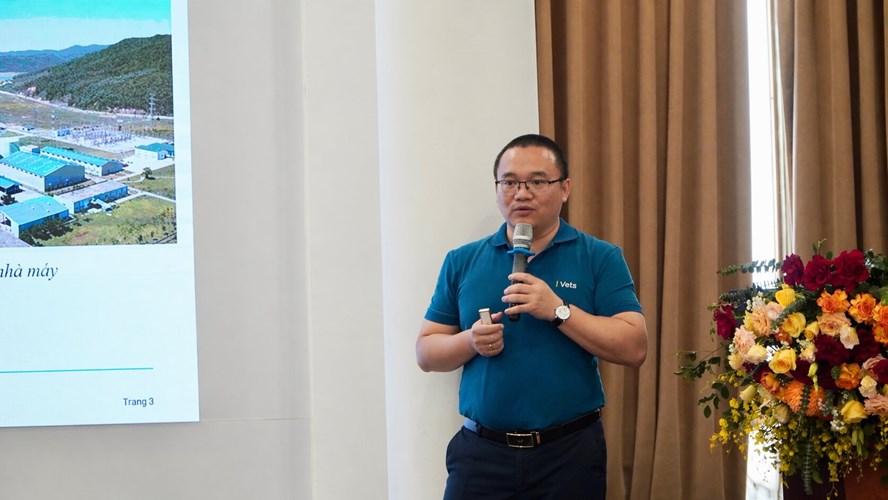
Presenting the audit results for the thermal power industry, Mr. Duong Chi Cong from Vietnam Technology Solutions Joint Stock Company (VETS), the domestic consulting unit, provided an overview of energy consumption in a 600 MW coal-fired power plant. Coal accounts for over 99% of the plant’s total energy input, making it the primary energy source requiring strict control and targeted efficiency improvement measures.
Mr. Duong Chi Cong, VETS Representative, presents energy audit results for the thermal power industry.
Through detailed analysis, key areas of energy consumption and losses were identified, including boilers, flue gas heat loss, the steam cycle, and auxiliary systems consuming internal electricity. These areas directly impact the plant’s overall efficiency and operating cost.
Building on domestic audit results, Mr. Fridolin Müller Holm, Energy Expert from Viegand Maagøe (international consultant), shared that current trends in improving energy efficiency in the power sector are shifting toward optimizing the entire generation and distribution system, rather than focusing solely on individual plants. Solutions such as operational optimization, reduction of self-consumed electricity, and waste heat recovery are widely implemented to enhance efficiency and reduce fuel consumption.
Potential for energy efficiency improvement in the cement industry
Unlike thermal power, audit results in the cement industry indicate that energy consumption is concentrated mainly in clinker production and grinding systems. Data from the demonstration project show that electricity consumption for clinker ranges from 49-55 kWh/ton, while heat consumption ranges from 700-900 kcal/ton, depending on production lines.
A notable finding is the variation in Specific Energy Consumption (SEC) among production lines within the same plant, indicating that saving potential lies not only in technology investment but also in improving operations and optimizing existing systems.
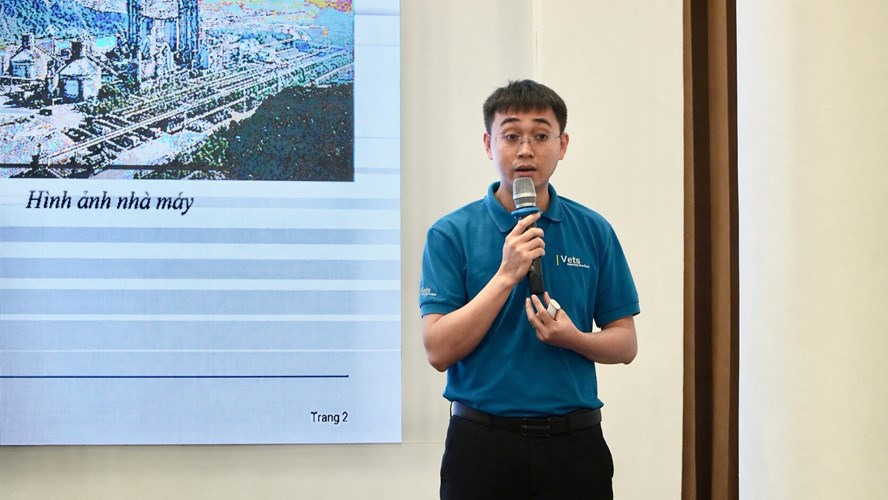
Mr. Nguyen Trong Hau, Head of Technical Solutions at VETS, presents energy audit results for the cement industry.
Key energy-consuming areas were identified, including kilns, preheater towers, clinker cooling systems, and grinding processes. Based on this, improvement solutions focus on enhancing thermal equipment efficiency, optimizing grinding processes, and utilizing waste heat.
Practical insights from industry were also highlighted through a presentation by a representative from Long Son Cement Company, a participant in the demonstration audit. Participation in the audit enabled the company to clearly identify major energy consumption areas, forming a basis for prioritizing improvement measures aligned with actual operating conditions.
International experience further emphasized solutions such as improving kiln and preheater efficiency, upgrading clinker cooling systems, optimizing grinding, and utilizing waste heat - approaches that have already been applied in practice.
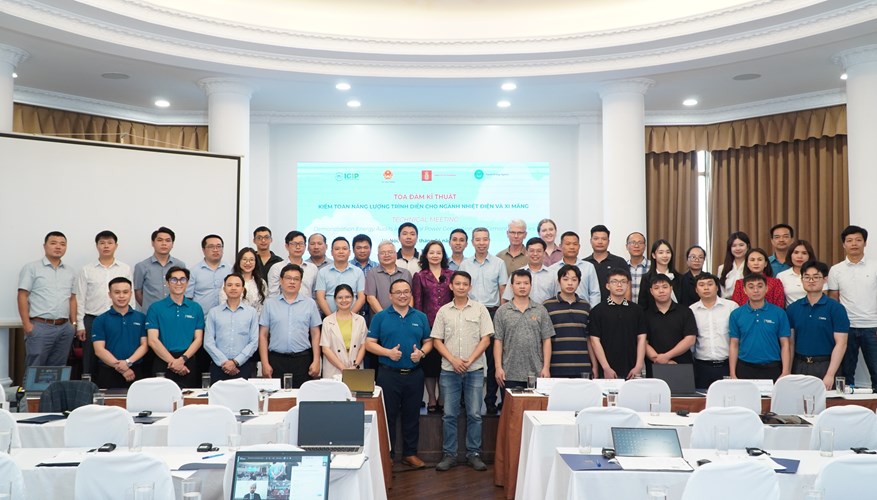
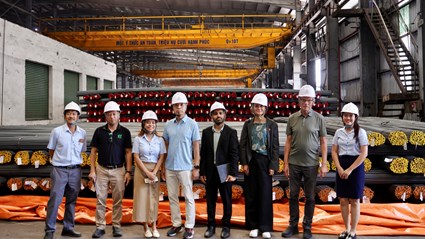
Delegates attending the technical workshop.
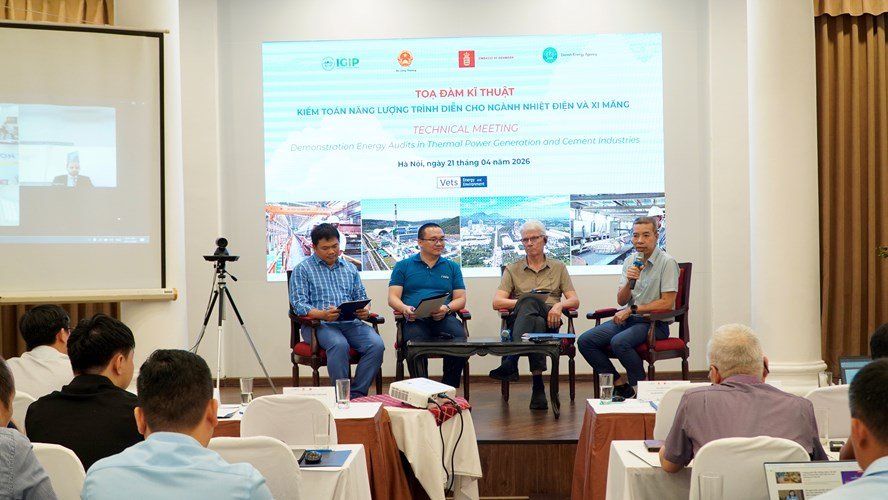
Based on domestic audit results and international experience, the workshop continued with in-depth discussions on the applicability of these solutions under Vietnam’s conditions. Moderating the session, Mr. Hoang Van Tam, Head of the General Affairs and International Cooperation Division (IGIP), stated that the goal was to gather feedback from experts and enterprises to refine recommendations, ensuring they are practical rather than purely theoretical.
The discussion aims to finalize energy audit experiences and clarify recommended solutions for Vietnam.
Discussions focused on technical issues such as the feasibility of applying heat pumps in thermal power plants, the impact of flexible operation on efficiency and equipment lifespan, trends in alternative fuel use in the cement industry, and the potential for waste heat recovery using Organic Rankine Cycle (ORC) technology. Participants also addressed data challenges in developing energy maps and the conditions for applying advanced technologies such as AI/Machine Learning.
The inputs collected at the workshop are expected to assist authorities and relevant units in further refining demonstration energy audit reports and clarifying the practical conditions for implementing proposed solutions. This will contribute to improving the feasibility of recommendations and promoting the adoption of energy efficiency measures in energy-intensive industries.
DEPP3 PROGRAM







 21 projects
 13 industries
 15 provinces


.png?w=425&h=239&mode=crop)