Support needed for enterprises to unlock energy efficiency potential
Thứ tư, 29/07/2026 - 14:49
Energy efficiency (EE) is a major issue for many countries. The Vietnam Law Newspaper (Báo Pháp luật Việt Nam) interviewed Ms. Nethe Veje Laursen, Energy Counsellor at the Embassy of Denmark in Vietnam, on this vital topic.
Energy efficiency (EE) helps enterprises become more resilient to energy price fluctuations
Could you evaluate the role of EE and the cooperation between our two countries in this area?
- Vietnam and Denmark have cooperated on energy since 2013. This cooperation focuses on long-term energy planning, the effective integration of renewable energy into the power grid, and EE in industry. In fact, industrial EE has been a core part of the partnership between our two countries from the very beginning.
Both Denmark and Vietnam prioritize climate change action, CO2 emissions reduction, and long-term partnership. This created a very constructive foundation right from the start. However, it must be affirmed that EE is a challenge for every nation. It is not a quick fix but requires continued focus.
EE is the "first fuel," as the International Energy Agency (IEA) puts it. We need energy, but using it more efficiently means using less. Using less energy reduces stress on infrastructure and decreases dependency on imported fuels. In terms of potential, the IEA assesses that EE opportunities could reduce electricity demand growth for Vietnam by up to 20% by 2030.
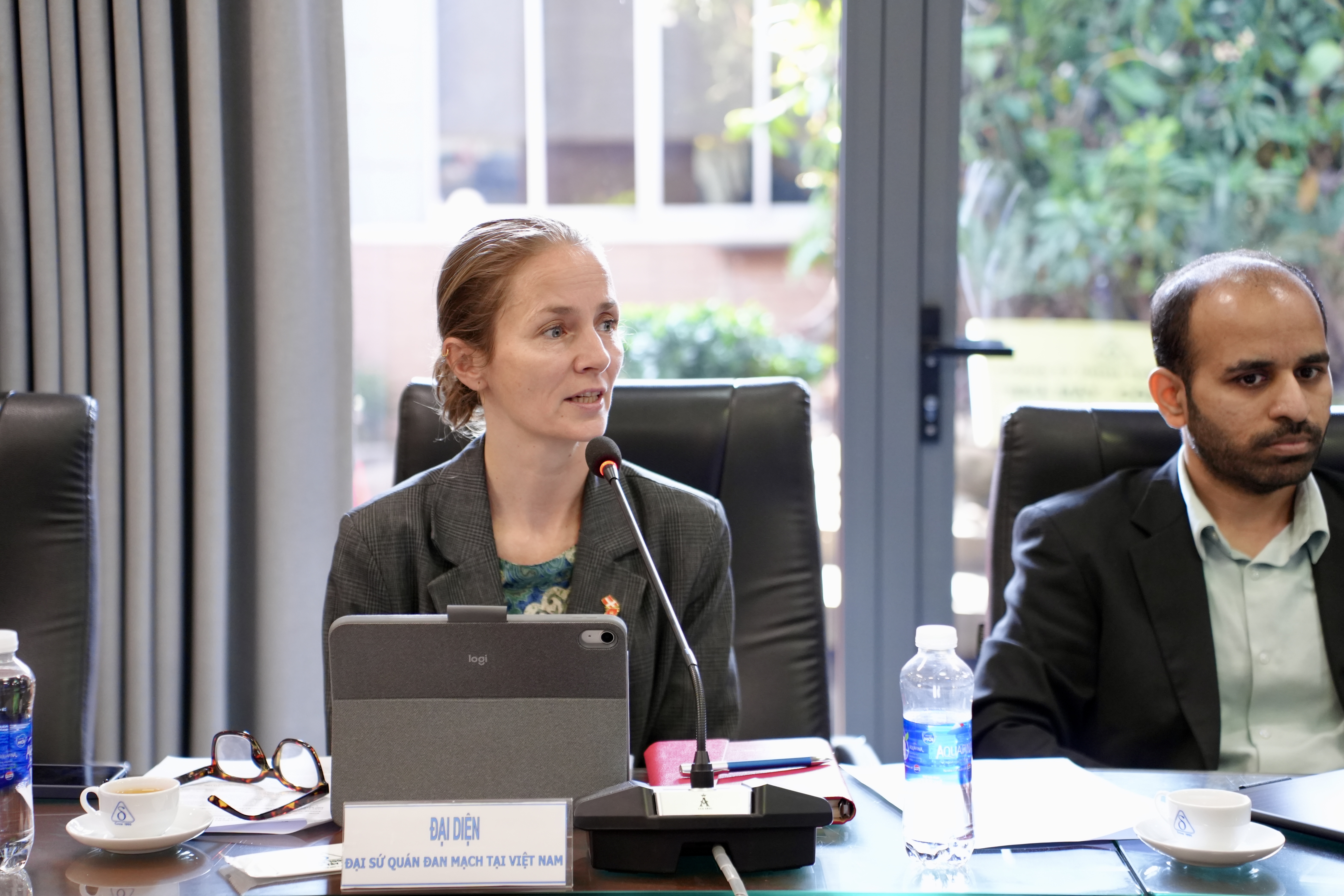
Ms. Nethe Veje Laursen - Energy Counsellor at the Embassy of Denmark.
How do you assess Vietnam’s progress in improving energy efficiency?
- Vietnam has set ambitious economic growth targets, which translate into growing energy demand, as well as very ambitious climate goals. This presents a challenge, and this is precisely when EE must be made a top priority. EE is a cornerstone of Vietnam’s strategy to achieve its Net-Zero 2050 targets, helping lower power sector investments and reduce fuel imports. Vietnam has already been a first mover in recognizing EE as a key pillar in the green transition and overall sustainable development.
.png)
Representatives of the Embassy of Denmark visiting an energy-efficient industrial facility
Progress is very real at the micro level—with specific programs, standards, and individual projects. However, there is less progress at the macro level, as aggregate energy intensity needs further improvement.
Vietnamese enterprises often worry about the initial investment costs of energy efficiency. What recommendations do you have to help them feel more confident?
- It is completely understandable that enterprises are concerned about costs. However, this should actually be the main argument for focusing on EE. Treating energy as any other input to production makes complete sense. EE also makes enterprises more resilient to energy price shifts.
However, implementing EE is relatively complex—it consists of a plethora of projects and behavioral changes, and requires consistent focus. This is basically a new way of thinking for many enterprises. It is also important to understand that energy is not a purely technical issue, but a key strategic focus area. Therefore, enterprise management must be engaged and fully understand the costs and benefits of EE projects on overall production costs.

Ms. Nethe Veje Laursen (left) during a site visit with enterprises participating in the Vietnam - Denmark energy partnership program
For some enterprises, access to finance is also a challenge. On this matter, I would say that not only enterprises, but also banks, find EE relatively complex. They do not yet fully grasp the value of improving EE. Therefore, it is very beneficial to have dedicated lending products or facilities that provide targeted loans for EE projects, managed by professionals who understand these benefits.
Support is needed for enterprises to unlock EE potential
To make EE practices widespread among Vietnamese enterprises, what policies should Vietnamese state management agencies adopt to support and accelerate this transition?
- What we have learned from more than five decades of focusing on EE in Denmark is that real-life examples are extremely powerful. Vietnam could consider providing support to frontrunner enterprises and have them share their experience. Combining these practical examples with mandatory obligations and incentives has proven to be very successful in Denmark.
It is important to ensure that targets are not introduced in isolation. Vietnam has a very positive target of 8–10% energy savings, but enterprises need assistance and incentives to unlock their EE potential.
From the government side, it is also crucial to ensure that the right competencies are available—educating energy professionals and consultants so they can assist enterprises in evaluating systems and identifying the best EE projects.
Furthermore, good EE policies must be followed by robust implementation and enforcement, ensuring that targets set on paper are achieved through a realistic, actionable roadmap.
What upcoming programs does Denmark plan to implement to further assist Vietnam in energy efficiency and conservation?
- Through the Danish-Vietnamese Energy Partnership Programme (DEPP), the Danish Energy Agency plans to continue its focus on EE in industry. We are currently working to establish a Center of Excellence for Energy Efficiency (CoE). The CoE will act as a one-stop shop or a single point of entry where enterprises can access information as well as guidance on financial support available through the national Energy Efficiency Fund. The CoE will also serve as a knowledge hub for experts, creating a platform for knowledge sharing and professional development.
Denmark is also working with Vietnam to gather more data demonstrating EE potential, continue sharing analyses and results to serve as inspiration for enterprises, and maintain policy dialogue with government partners.
Thank you very much!
Interview conducted by Hoang Tu