Developing economic-technical norms for energy efficiency consulting services in Vietnam
Thứ ba, 28/04/2026 - 11:45
On the mornings of April 22 and 24, the Agency for Innovation, Green Transition, and Industry Promotion (Ministry of Industry and Trade), in coordination with the Danish Energy Agency and the Embassy of Denmark, organized the consultation workshop titled “Developing economic-technical norms for energy efficiency consulting services in Vietnam” in Ho Chi Minh City and Hanoi.
The event was held within the framework of Component 3 of the Vietnam - Denmark Energy Partnership Program for the period 2020 – 2025 (DEPP3), funded by the Government of Denmark. Participants included representatives from the Agency for Innovation, Green Transition, and Industry Promotion, leaders of provincial Departments of Industry and Trade, centers for industrial promotion and energy efficiency, research institutes, universities, and industrial enterprises.
The workshops aimed to present research findings and consult stakeholders on proposed economic-technical norms for public services funded by the state budget in the field of energy efficiency, including energy audits and the establishment of energy management systems.
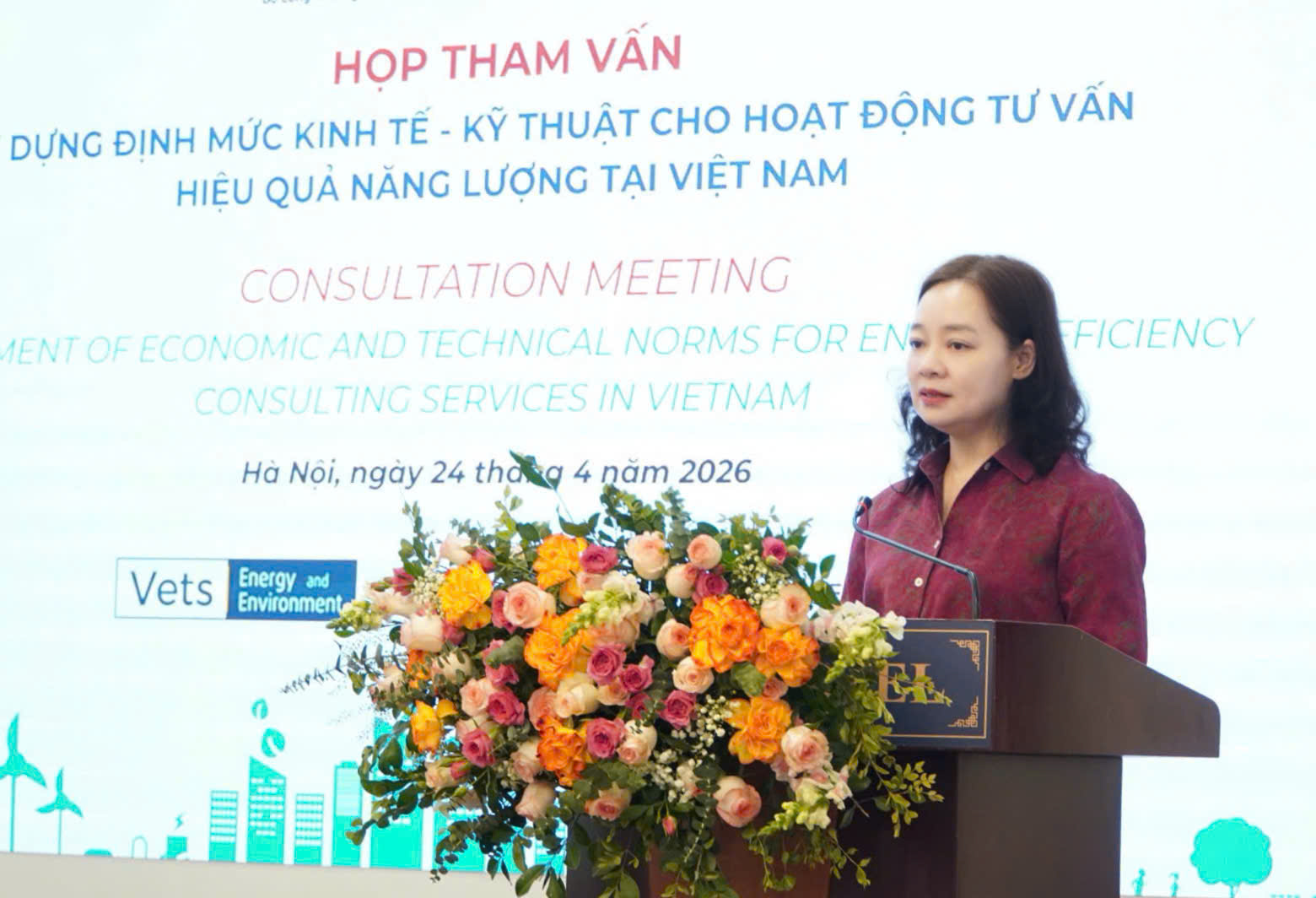
Ms. Nguyen Thi Lam Giang, Director General of the Agency for Innovation, Green Transition, and Industry Promotion, delivered the opening speech.
In her opening remarks, Ms. Nguyen Thi Lam Giang – Director General of the Agency for Innovation, Green Transition, and Industry Promotion stated: “In 2020, we issued Circular No. 25/2020/TT-BCT regulating the planning and reporting of energy efficiency implementation and energy audits. This is an important tool for designated key energy users to assess their current energy consumption, identify savings potential, and propose solutions within enterprises. Simultaneously, establishing and applying energy management systems according to Vietnamese or ISO standards is recognized as a complementary solution for businesses. However, in practice, the quality of energy auditing and consulting services for energy management systems remains inconsistent across different service providers.”
According to Ms. Giang, the gap in professional capacity, personnel, and equipment necessitates a clear reference framework regarding the scope of work, resource mobilization, and service output standards. On that basis, the Ministry of Industry and Trade has been actively developing draft economic–technical norms for energy audits and energy management activities, expected to be issued as a Circular later this year.
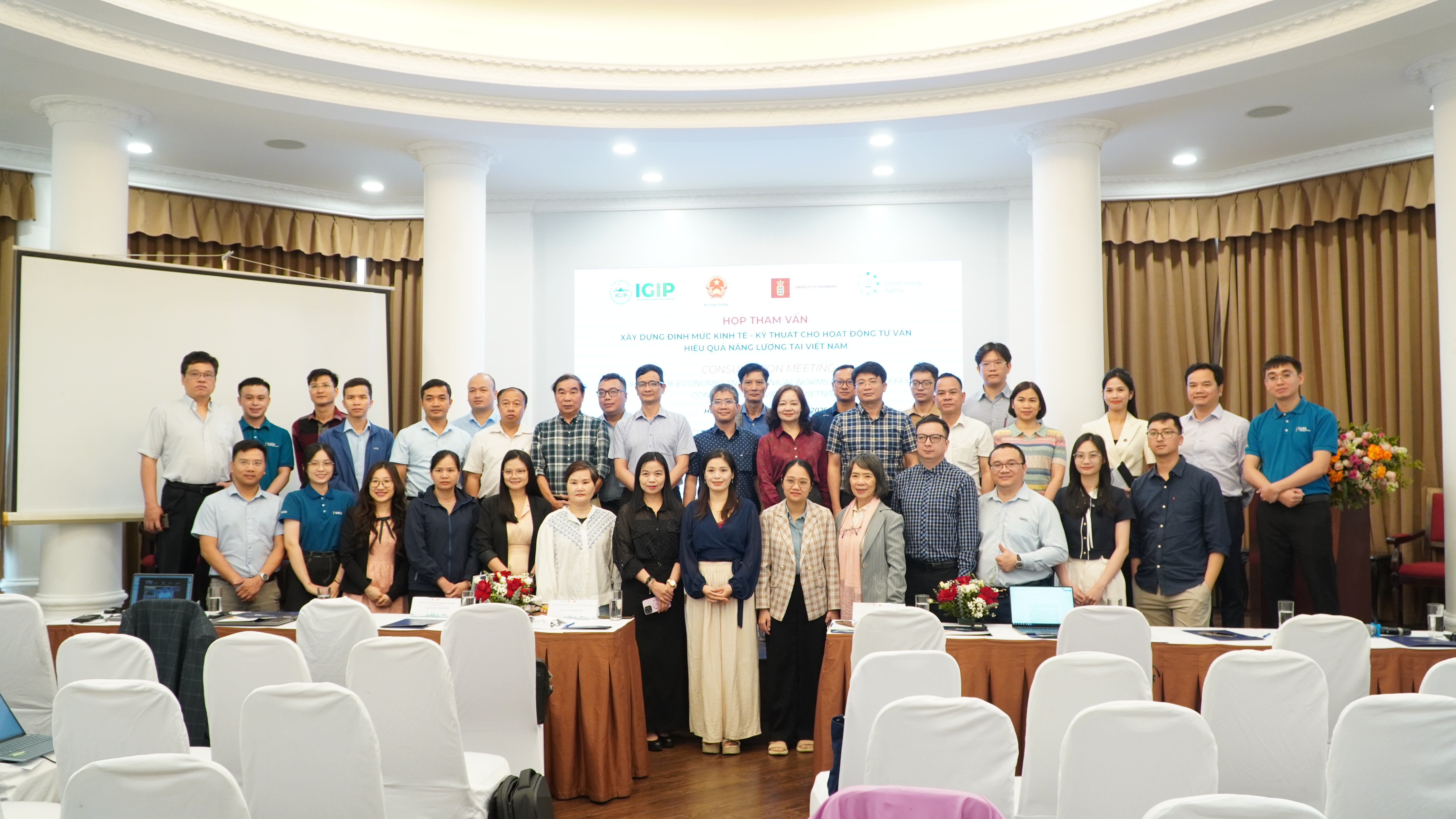
Representatives attending the consultation workshop in the Northern region.
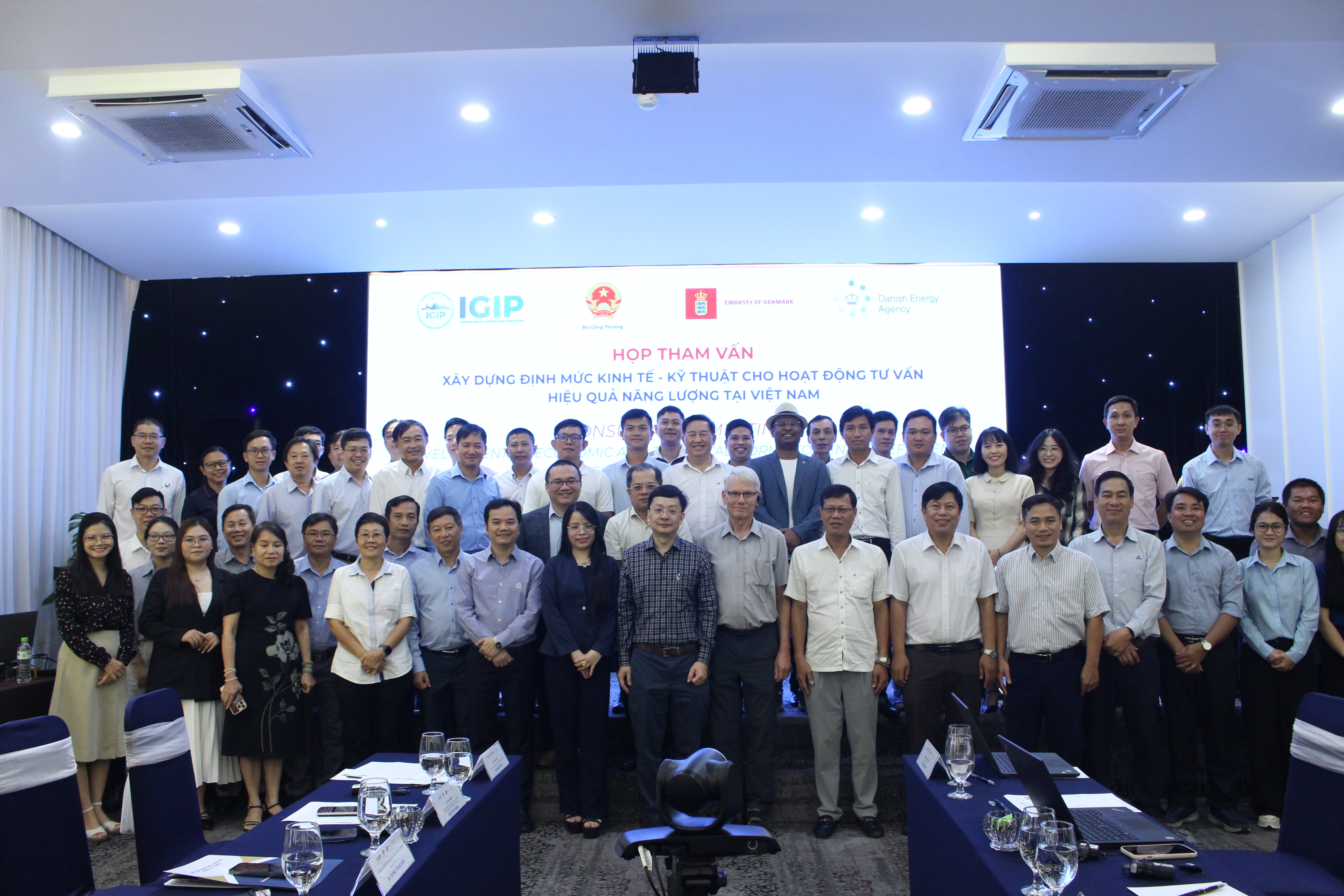
Representatives attending the consultation workshop in the Southern region.
At the workshop, Mr. Jorgen Hvid. Long-term Advisor for the DEPP3 Program, presented an overview of selected international norms for energy audits and energy management systems. He noted that South Korea controls audit quality through regulations on audit duration and auditor capacity; India combines market mechanisms with cost subsidies and sector-specific standardization; China links audits with compliance to energy consumption norms; while Europe/Denmark applies a unified legal framework, strict MRV systems, auditor certification, and multi-level evaluation mechanisms to ensure quality and avoid low-price competition. Based on these experiences, he recommended that Vietnam establish a comprehensive energy audit framework, including reasonable cost norms, sector-specific technical standards, mandatory audit content, and a national MRV system integrated with online reporting to enhance audit quality and enforcement efficiency.
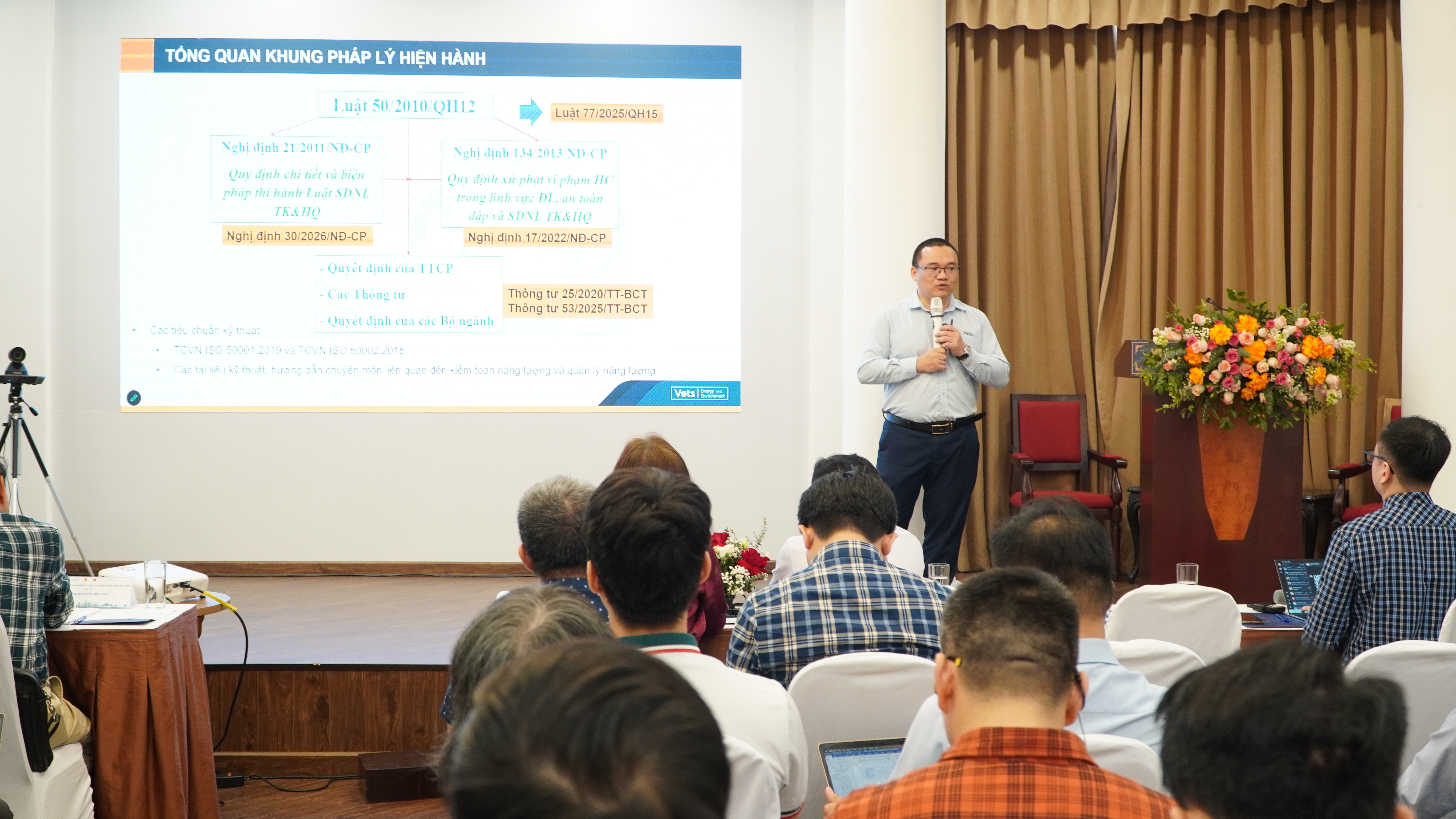
Mr. Duong Chi Cong, representing Vietnam Technology Solutions JSC (VETS), presenting at the workshop.
Mr. Duong Chi Cong, representing Vietnam Technology Solutions JSC (VETS), presented an overview of Vietnam's current legal framework in energy auditing and management. The presentation clarified regulations on mandatory subjects, audit procedures, requirements for service providers, and obligations of designated key energy users. It also highlighted that although the legal system is relatively comprehensive in its procedures and reporting requirements, it still lacks specific provisions on resource consumption norms and standardized service quality, resulting in disparities among service providers and inconsistent output quality.
In the following session, Mr. Duong Chi Cong introduced the draft economic-technical norms for energy auditing. The draft is built on a three-component approach: labor, machinery/equipment, and materials, aligned with current audit procedures. The norms are categorized into three groups based on energy consumption scale (from 1,000 TOE to over 10,000 TOE). It clearly defines steps from preparation, data collection, and site survey to measurement, analysis, and solution proposal. It also sets out service quality criteria and output requirements, ensuring comprehensive reflection of energy use status, identification of savings potential, and assessment of the investment efficiency of proposed measures.
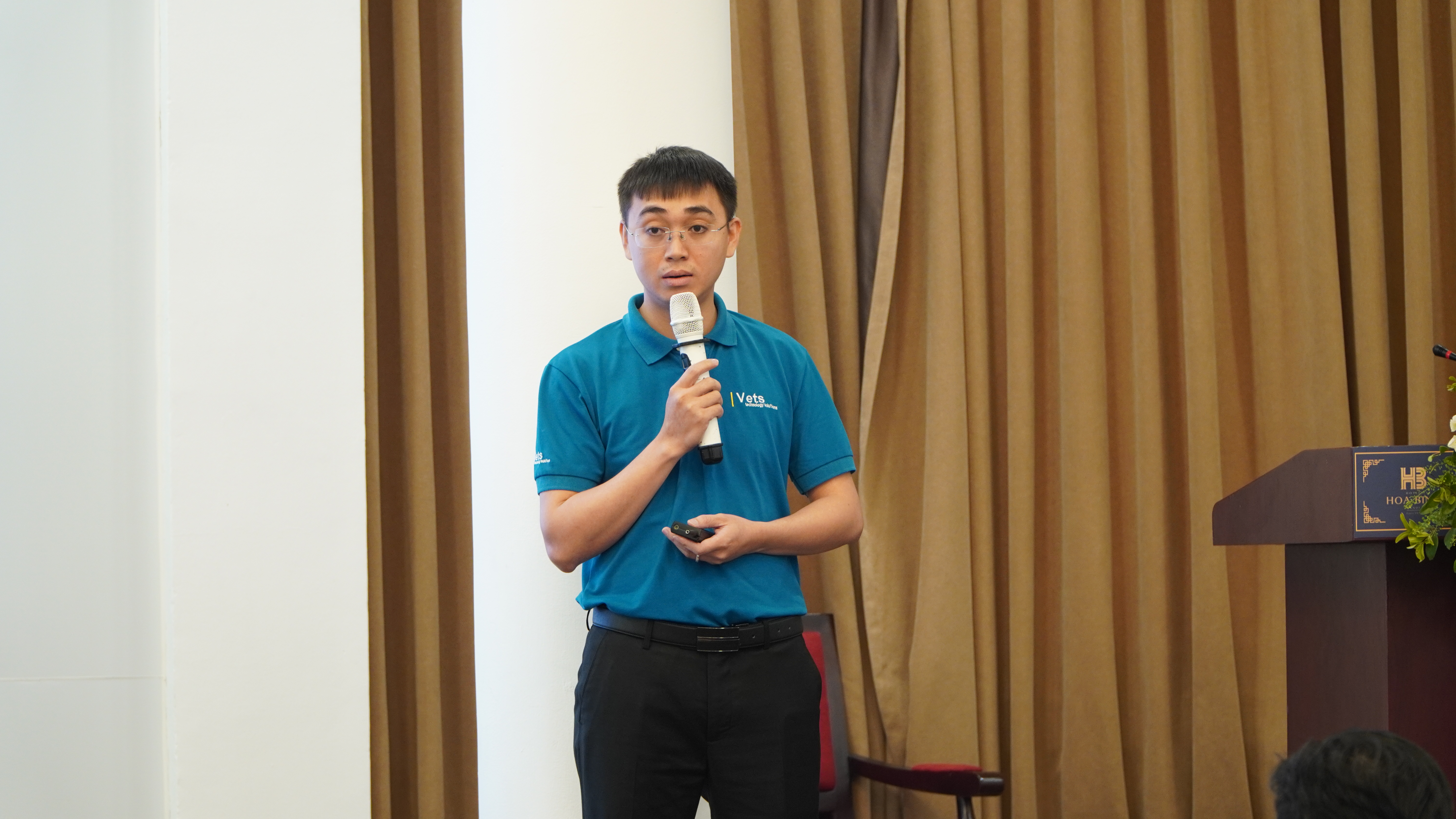
Mr. Nguyen Trong Hau, Head of the Technical Solutions Department at VETS, presented the draft economic-technical norms for consulting on energy management systems (EnMS).
In the final presentation, Mr. Nguyen Trong Hau – Head of Technical Solutions at VETS – introduced the draft economic–technical norms for consulting on energy management systems (EnMS). The draft comprises 15 steps, from preparation, current status assessment, energy baseline establishment, energy performance indicator (EnPI) setting, to system implementation, monitoring, evaluation, and improvement. Similar to energy audits, the draft categorizes norms by energy consumption scale and specifies requirements for resources, equipment, and outputs, including EmMS documentation, EnPIs, energy baselines, and action plans for improving energy performance. The norms is designed to ensure systematic implementation, practical applicability, and continuous improvement within enterprises.
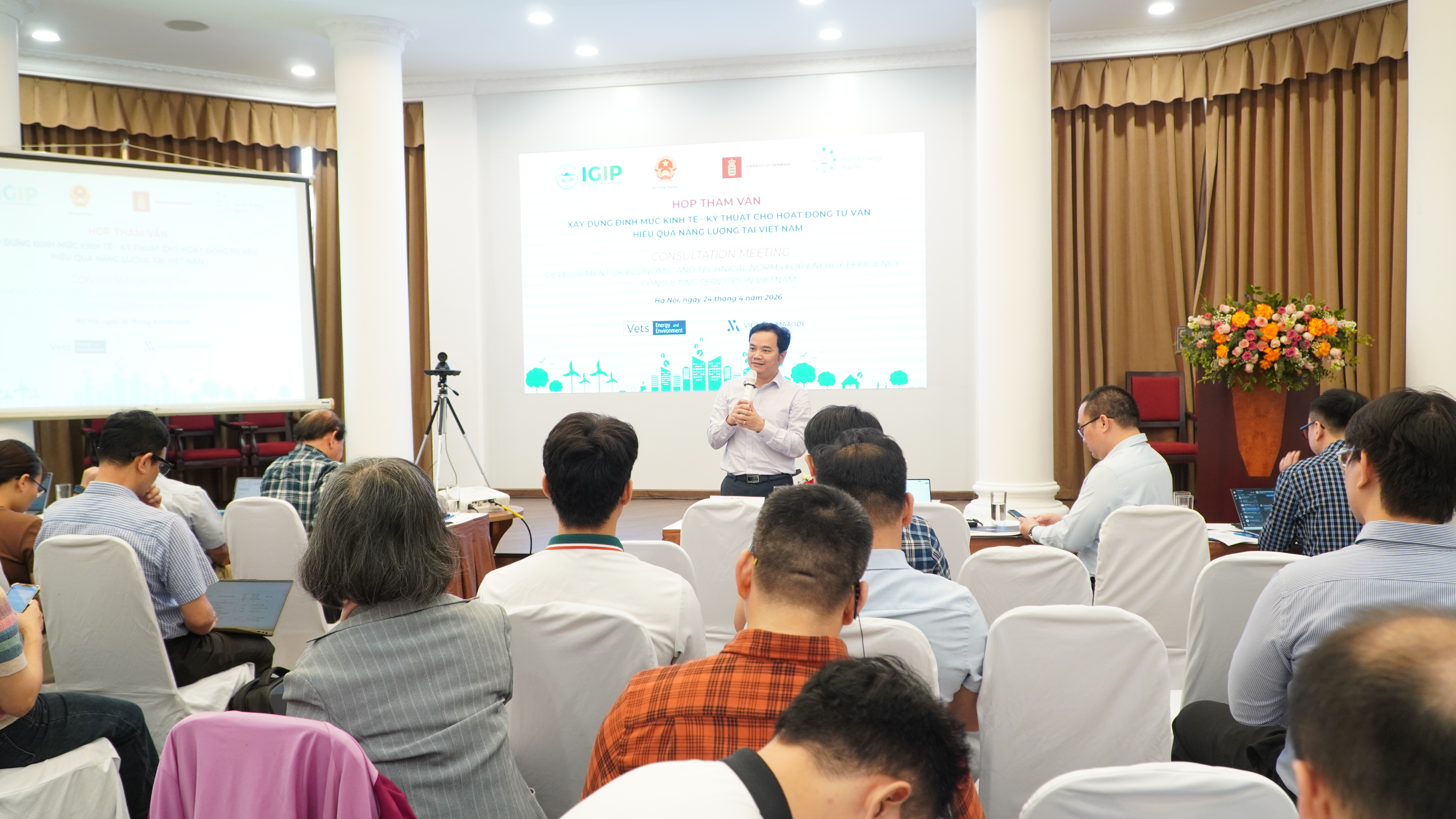
The workshops recorded numerous contributions from participants.
The discussion sessions were lively, with contributions from representatives of provincial Departments of Industry and Trade, centers for industrial promotion and energy efficiency, consulting firms, and industrial enterprises from both Northern and Southern regions. Feedback from both workshops indicated strong stakeholder interest in refining the norms. Many participants suggested further review and updates to ensure flexibility, alignment with sector-specific characteristics and enterprise scales, and increased feasibility in implementation.
The consultation results from the two workshops will serve as a crucial foundation for finalizing the draft economic-technical norms, aiming for official issuance in the near future. This is expected to contribute to improving the quality of energy consulting services and promoting energy efficiency in Vietnam.
DEPP3 PROGRAM