As a cornerstone of Vietnam’s economy, the steel industry drives the development of construction, mechanical engineering, manufacturing, and infrastructure. However, it is also a key energy-consuming sector facing mounting pressure to reduce emissions and adopt more sustainable practices.
Statistics show that energy consumption in the steel industry accounts for approximately 5.18% of the total energy consumption in the entire industrial sector. Meanwhile, the sector has the potential to save up to 21%, indicating significant room for improvement in energy efficiency.
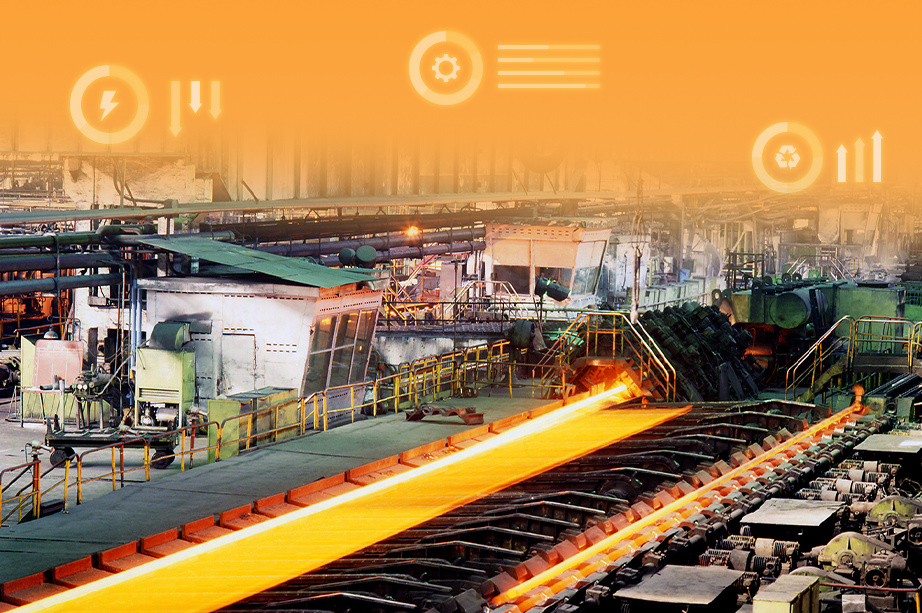
To accelerate the industry’s transition toward energy efficiency and emission reduction, on September 20, 2016, the Ministry of Industry and Trade issued Circular No.20/2016/TT-BCT, establishing energy benchmarking for the steel industry.
Subsequently, on March 13, 2019, the Prime Minister issued Decision No.280/QĐ-TTg, approving the National Energy Efficiency Programme for the period 2019-2030 (VNEEP3). The Program aims to reduce energy consumption in the steel industry by 5% to 16.5% by 2030, depending on the product type and production technology.
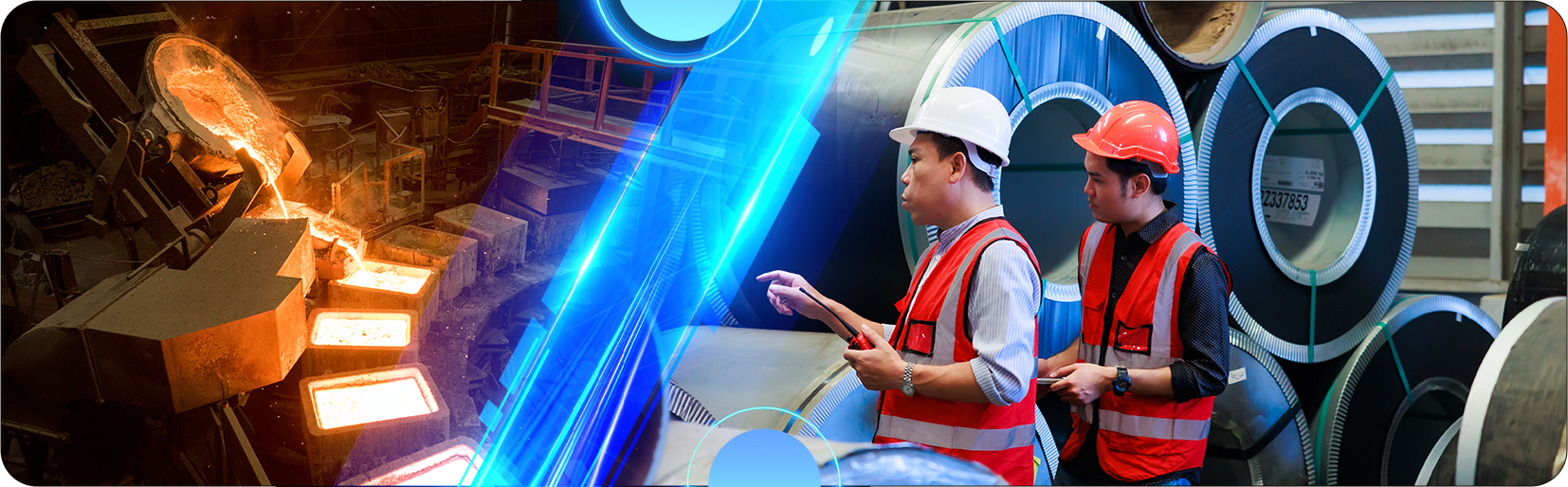
Vietnamese steel enterprises are not only facing pressure to comply with domestic policies and regulations but also confronting increasingly stringent standards in international markets. On October 1, 2023, the European Union (EU) launched the transition phase of the Carbon Border Adjustment Mechanism (CBAM), which mandates emissions reporting for imported steel products. This mechanism will impose a carbon tax on imports that exceed emissions thresholds, directly affecting Vietnam’s steel exporters. Apart from EU, major markets like the US, Japan, and Korea are tightening environmental regulations, forcing the Vietnamese steel industry to adopt long-term emission reduction strategies to maintain its competitive edge.
In this context, energy efficiency and emission reduction are no longer mere options but essential requirements for steel enterprises to stay ahead of the curve and survive in the market. Without making this shift, enterprises may face rising production costs, weakened competitiveness due to non-compliance, and the risk of being excluded from the market. On the contrary, those leading the way in optimizing energy performance, adopting clean technologies, and improving production processes will have the opportunity to consolidate their market position, expand their reach, and achieve sustainable growth in the future.
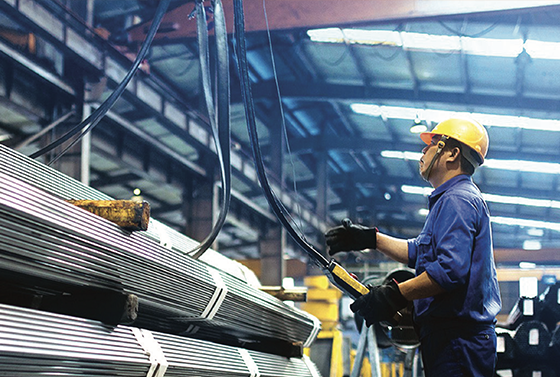
However, transitioning to energy-efficient technologies remains a challenge for many steelmakers, particularly in terms of financing and technical aspects. Assisting businesses overcome these barriers is precisely the goal of the Voluntary Agreement Scheme on Energy Efficiency in Energy-Intensive Industries (VAS), jointly implemented by the Ministry of Industry and Trade and the Danish Energy Agency under the Energy Partnership Program between Vietnam and Denmark 2020–2025 (DEPP3).
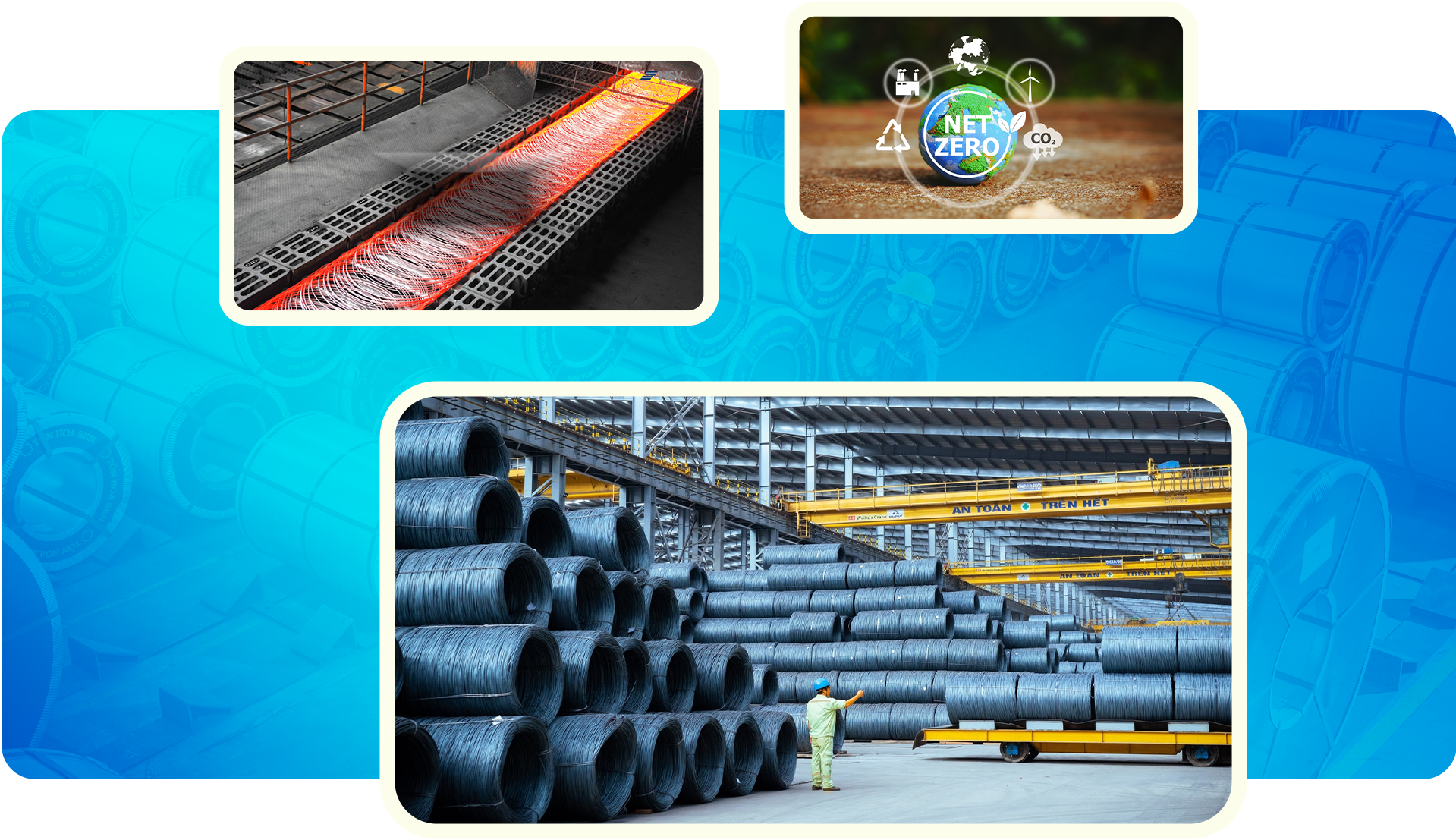
Benefits of VAS Participation for Steel Enterprises
NatSteelVina Company Limited (Viet-Sing Steel brand) is the first joint venture enterprise in Vietnam's steel industry, operating a modern production line with a capacity of 200,000 tons per year.
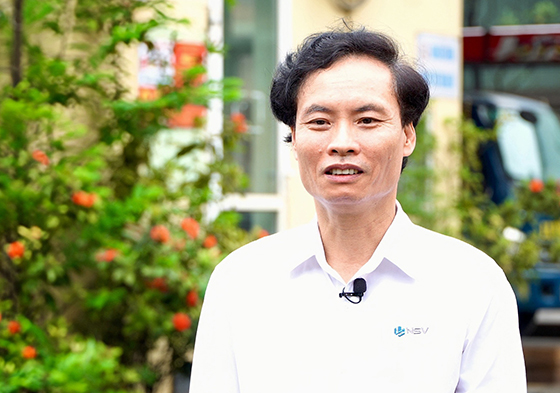
Mr. Le Khac Giang, Deputy Head of Energy Management at Deputy Head of Production Department at NatSteelVina
According to Mr. Le Khac Giang, Deputy Head of Energy Management Department and Deputy Head of Production Department at NatSteelVina, NatSteelVina currently operates a pusher-type billet reheating furnace using heavy fuel oil (FO) as its primary fuel. The furnace operates at high temperatures (1,050–1,150°C) to ensure optimal billet temperature for rolling. The furnace is currently equipped with an automated control system from Japan, but it has yet to be optimized, leaving significant room for energy efficiency.
“We were already aware of the energy inefficiencies at the reheating furnace, but lacked the resources and capacity to identify the most effective solutions,” Mr. Giang explained.
NatSteelVina’s participation in the 2023 VAS Program opened up opportunities to receive technical support from both local and international experts, who helped identify promising energy efficiency solutions.
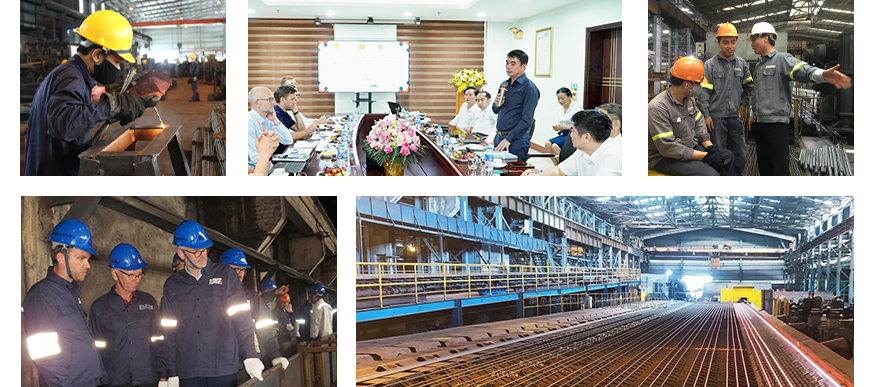
Specifically, local and international experts from the VAS Program worked with NatSteelVina through a three-phase process to determine the most viable energy efficiency solutions.
According to Mr. Jorgen Hvid, Long-term Advisor of the DEPP3 Program, the first phase focused on screening. During this stage, international and local experts jointly identified potential solutions with high feasibility and strong potential to optimize energy use. As a result, two major energy efficiency opportunities were identified for billet reheating furnaces. Among them, the solution to optimize the furnace control system was selected for further in-depth study.
The second phase, the pre-feasibility study, focused on a detailed technical and economic evaluation of the proposed solution. The findings confirmed the viability of either upgrading or replacing the furnace’s control system to enhance operational efficiency.
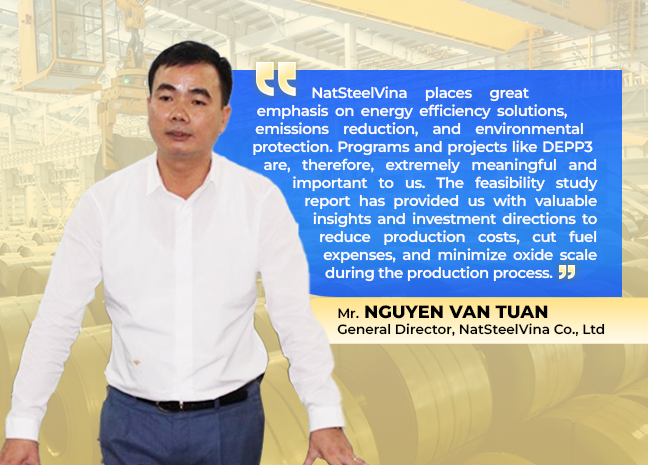
Following the screening and pre-feasibility phases, the program’s experts moved on to a full feasibility study.
“This final phase delivers robust, science-based data to support investment decisions. The analysis covers all relevant aspects—technical feasibility, investment costs, energy efficiency, payback period, risks, and impacts on operations and production,” Mr. Jorgen Hvid emphasized.
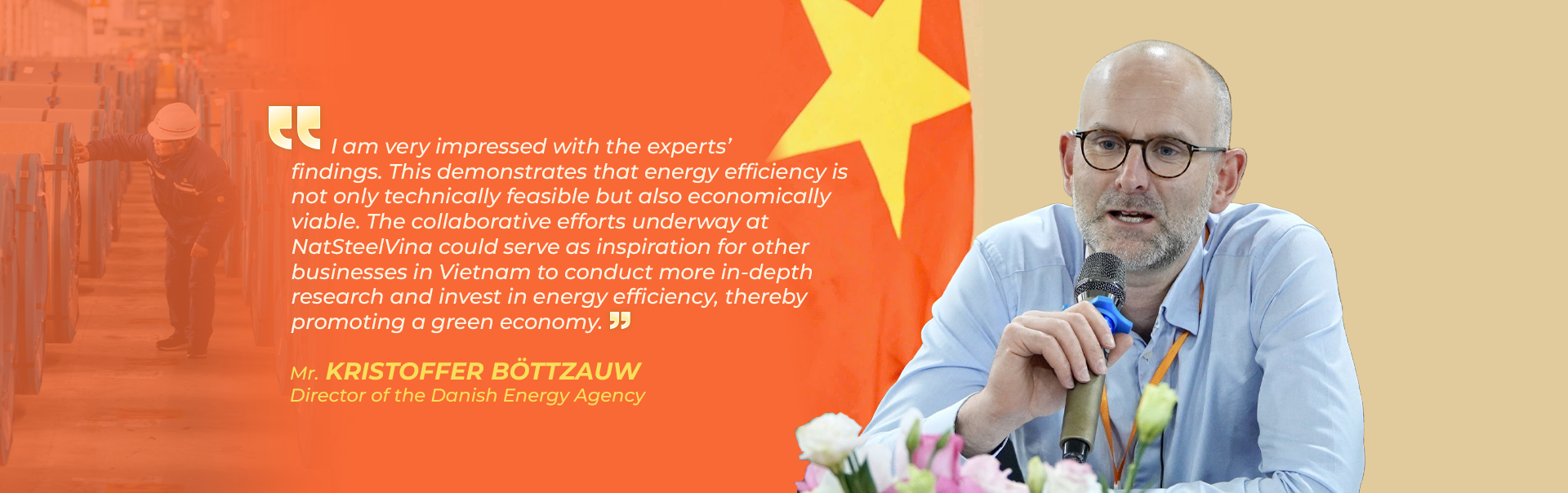
Sharing more specifically about the solution to optimize the furnace control system at NatSteelVina, Mr. Hoa Thai Thanh, energy auditor at Vietnam Technology Solutions JSC (VETS), noted that the feasibility report proposed two solutions: upgrading the existing furnace combustion control system with a new PLC unit connected to the current control cabinet, or replacing the entire control system with a new PLC cabinet.
Among them, the solution to upgrade the combustion control system was proposed by VETS in the pre-feasibility study report. This solution will reuse the entire old control system, only adding a PLC unit and an oxygen sensor for flue gas monitoring. "By implementing this solution, NatSteelVina can save approximately VND 3.84 billion, with a payback period of two years on an investment of VND 3.54 billion. Beyond the cost-saving potential, this solution also helps the enterprise reduce CO₂ emissions, protect the environment, and facilitate easier furnace operation for workers," Mr. Thanh emphasized.
According to Mr. Hoa Thai Thanh, the option of replacing the entire system with a new PLC cabinet also offers a similar cost-saving potential and payback period as the first measure. Although this approach demands a higher investment of VND 4.87 billion, Mr. Thanh believes that the new PLC system offers greater flexibility in system integration and makes it easier to implement tailored solutions, especially considering the potential for future expansion when transitioning to LNG fuel.
Pusher-type billet reheating furnaces are widely used in Vietnam’s steel industry due to their practicality and operational efficiency. Yet, they are also among the largest energy consumers in the production line. The technical insights and in-depth analyses from NatSteelVina’s case offer valuable lessons—not only for the enterprise itself but also for other steelmakers using similar technologies.
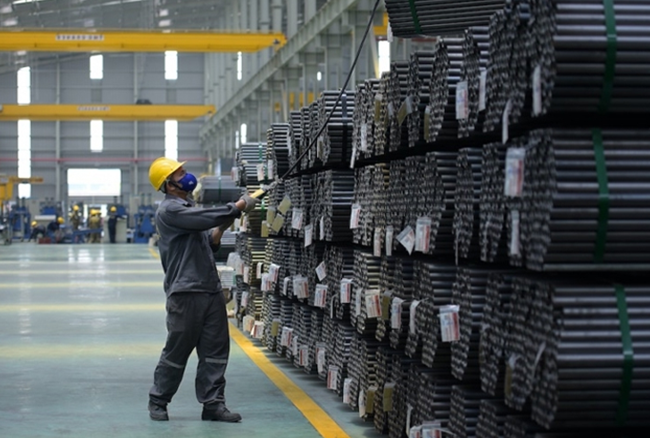
By adopting a methodical approach—anchored in rigorous, scientific evaluation—Vietnamese steel enterprises can significantly enhance their energy efficiency, reduce production costs, cut greenhouse gas emissions, and bolster their competitiveness in an increasingly green-driven global market.
DEPP3 Program