In an era where the building materials industry faces pressure to reduce emissions and optimize energy costs, the enhancement of energy efficiency is not only a necessity but also an opportunity for enterprises to restructure operations towards a greener and more sustainable direction.
With the support from the VAS Program — a collaborative initiative within the framework of DEPP3 Program – Song Da Cao Cuong Joint Stock Company is gradually achieving its sustainable development goals through technological advancements and long-term investment directions linked to energy efficiency and environmental responsibility.
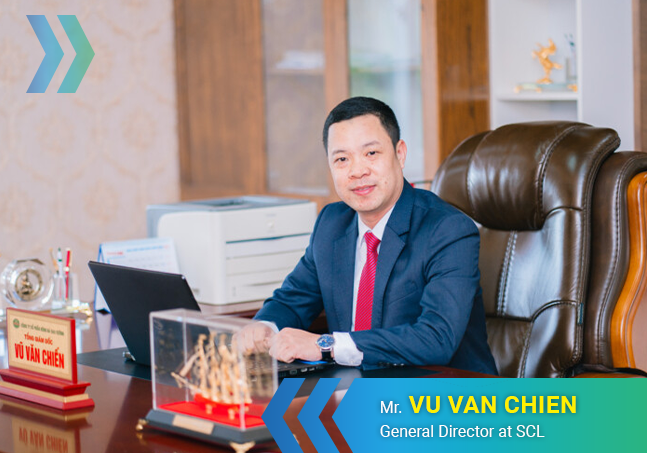
Mr. Vu Van Chien:
Thank you for having me. As a company operating in the building materials manufacturing sector, we consume a significant amount of energy annually. Energy savings not only lower costs and enhance production efficiency but also play a crucial role in achieving our sustainable development goals.
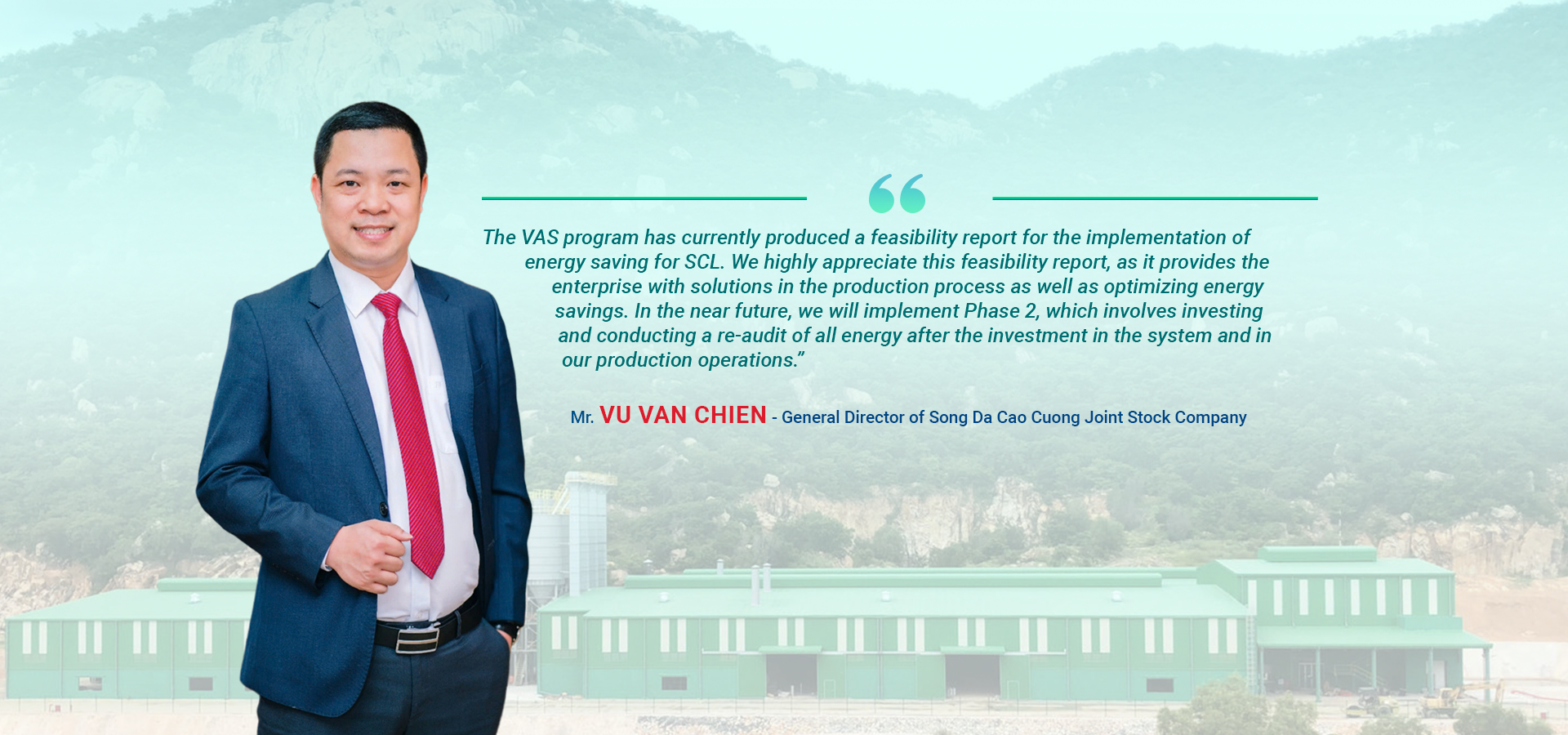
Consequently, energy saving has always been a strategic priority for Song Da Cao Cuong. When we were introduced to the VAS Program, implemented by the Ministry of Industry and Trade and the Danish Energy Agency, we recognized this as a great opportunity to access advanced energy-saving solutions. In particular, the Program provides in-depth technical assistance, and we see clear potential for improving energy efficiency in our production, prompting our decision to participate.
I believe this is a valuable opportunity for manufacturing enterprises to leverage. Energy savings not only help reduce costs but also enable us to comply better with environmental regulations, aiming towards green and sustainable development. Additionally, by participating in the program, our enterprises will have an additional high-quality technical assistance network for effective implementation.
What criteria or conditions did Song Da Cao Cuong have to meet to participate in the VAS program?
Mr. Vu Van Chien:
The VAS Program is tailored for industrial enterprises, especially those in energy-intensive sectors, that show a strong commitment to implementing energy-saving solutions. To participate, enterprises must meet certain criteria, including the potential for improving energy efficiency, readiness to provide information for energy audits, and a clear commitment from leadership regarding green transformation and sustainable development.
Application of energy-saving technology
For Song Da Cao Cuong, we approached this with proactivity and seriousness from the beginning. The leadership clearly identified energy efficiency as a strategic priority. We have a dedicated technical department capable of closely collaborating with experts throughout the implementation process.
Before registering, the company thoroughly reviewed the application form and program criteria, gathering information through official channels such as the website and guidance documents. Our technical team reviewed all the requirements and prepared complete documentation, including energy consumption data, production processes, and equipment operation information required for initial assessments.
We committed to participating fully in all program activities, including energy audits, developing action plans, piloting selected solutions, and reporting results. Thanks to careful preparation and determination from within the company, Song Da Cao Cuong met the conditions and became one of the selected enterprises for the pilot phase of the VAS program.
In participating in the VAS Program, what support has the company received, and how do you evaluate the support from the program?
Mr. Vu Van Chien:
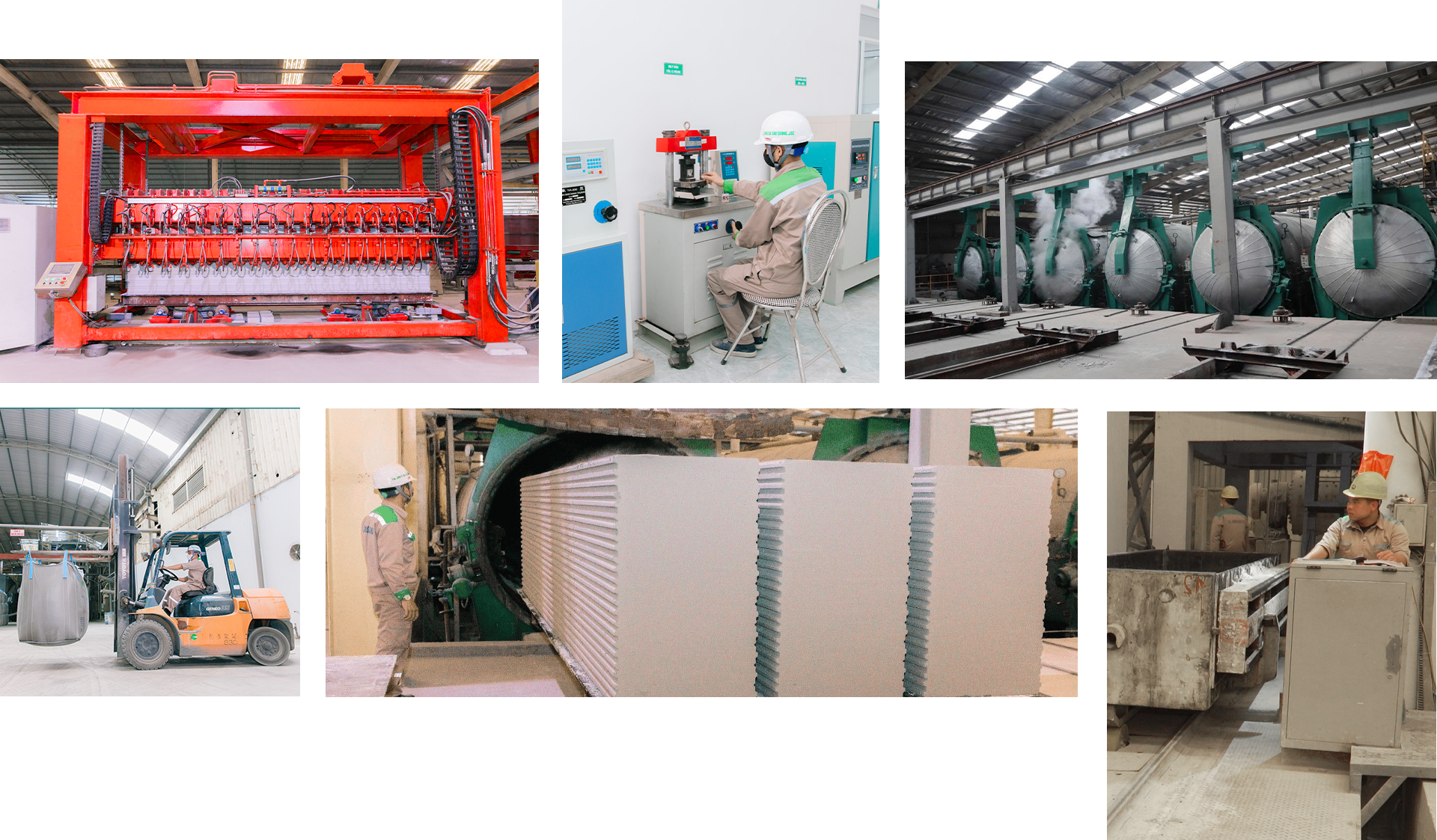
Immediately upon our participation, we received systematic support and close guidance from both domestic and international experts. First, the detailed energy audit process helped us identify significant energy consumption areas and potential savings. Following this, the program continued to assist us with the development of pre-feasibility and feasibility studies for high-efficiency solutions.
What we highly appreciate is the practical and flexible approach of the expert team. They not only provided technical recommendations but also worked directly with our technical department to calculate, simulate, and choose the most suitable options based on actual operating conditions.
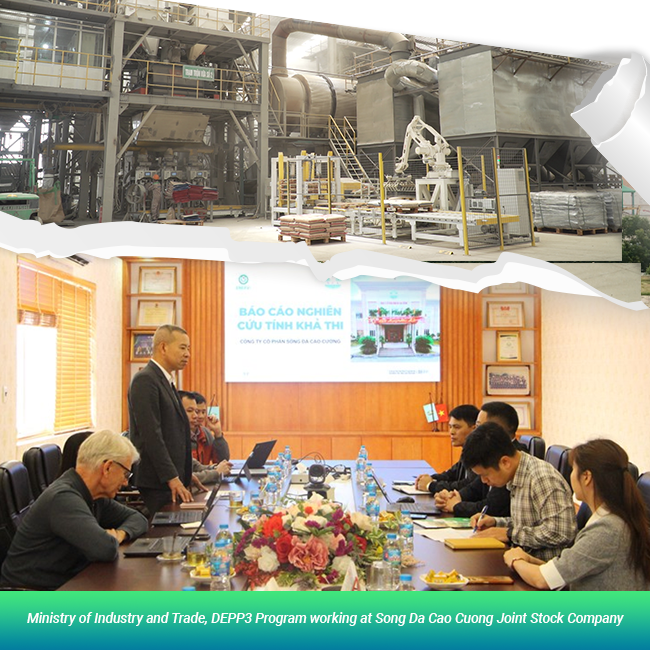
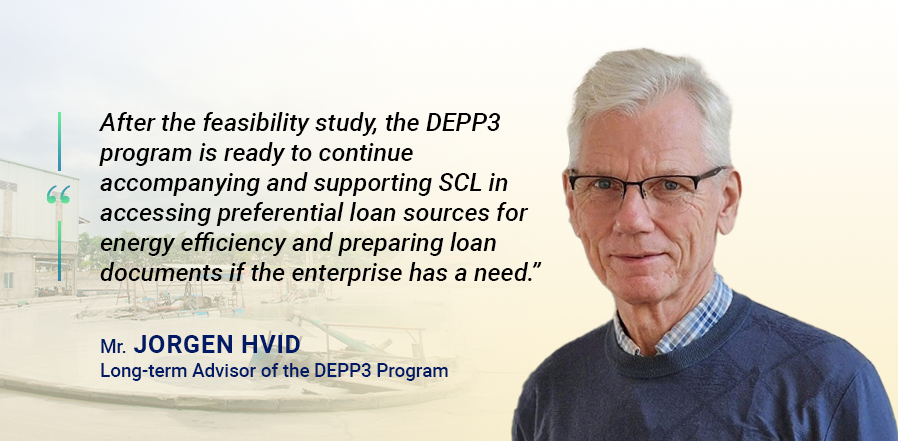
During the work at the plant, the Program's expert team helped carry out screening studies, implement energy audits, and conduct pre-feasibility and feasibility studies. As a result, they proposed that we implement three specific solutions to optimize energy efficiency and utilize waste energy in our production processes.
Additionally, the program also offers training and capacity building for our technical team, empowering us to be more proactive in long-term energy management. I believe the support from the VAS Program is comprehensive and substantive—from technical analysis and investment planning to enhancing human resources. This has equipped us with a more strategic perspective on energy efficiency, preparing us for the next steps in our journey toward green and sustainable development.
Could you share more details about these three solutions and the benefits that SCL will gain from their implementation?
Mr. Vu Van Chien:
After completing a series of activities including screening, energy auditing, and pre-feasibility and feasibility studies, the Program's experts proposed three viable energy-saving solutions that can be practically implemented in production.
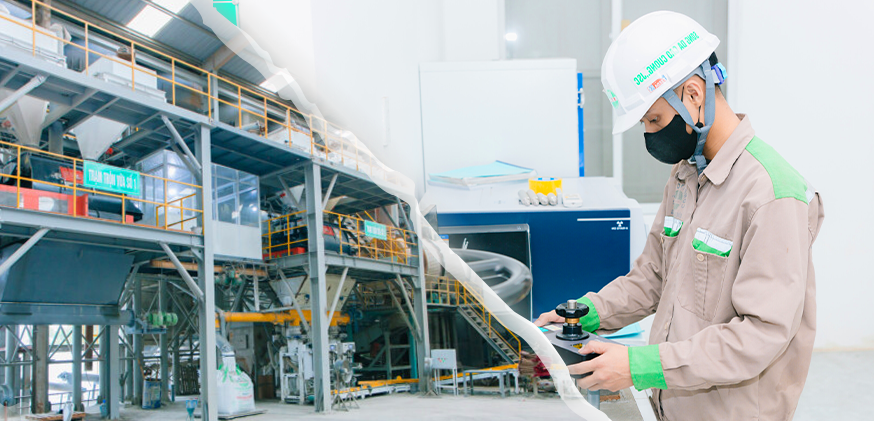
The first solution is heat recovery to improve the steam system. Field surveys revealed that the current steam system of the plant is operating inefficiently, leading to condensate water that is no longer "clean" due to direct contact with products, and steam being discharged directly into the environment at high temperatures of 180°C – 190°C. To address these issues, experts recommended installing a flash tank and a deaerator to recover and purify waste heat for reuse in the boiler. This solution could save 465 tons of fuel per year, with an investment of approximately VND 1.2 billion and a payback period of 1.7 years. Notably, this solution incurs no operating or maintenance costs.
The second proposed solution aims to increase the combustion efficiency of the boiler by improving the grate firing system. The plant currently uses fans to distribute fuel (wood chips) to the boiler, resulting in high carbon residue in the ash and elevated CO levels in the flue gas. The DEPP3 Program's experts suggested replacing the fuel distribution structure to boost combustion efficiency. This solution requires only VND 100 million in investment but helps save 58 tons of fuel per year, with a payback period of 14 months.
The final proposed solution is to utilize waste heat from the high-temperature drying system, which ranges from 120°C to 130°C. The high temperature of the exhaust gas not only damages bag filters but also wastes thermal energy. Accordingly, experts proposed installing a water preheater to utilize waste heat to supplement the boiler. With an investment of around VND 1.58 billion, this solution could save nearly 700 tons of biomass per year, with a payback period of 18 months. Similar to the previous solutions, it does not incur any operating or maintenance costs.
Did Song Da Cao Cuong encounter any difficulties while participating in this program?
Mr. Vu Van Chien:
When participating in the VAS Program, we recognized it as a tremendous opportunity to access potential and systematic energy-saving solutions. However, during the implementation process, we did face several challenges.
One of the first challenges was related to personnel. Although our company prioritizes energy-saving efforts, implementing comprehensive solutions across the entire plant still requires a dedicated technical team with better expertise. Understanding the technical requirements of the program, which align with international standards, necessitated significant support from experts.
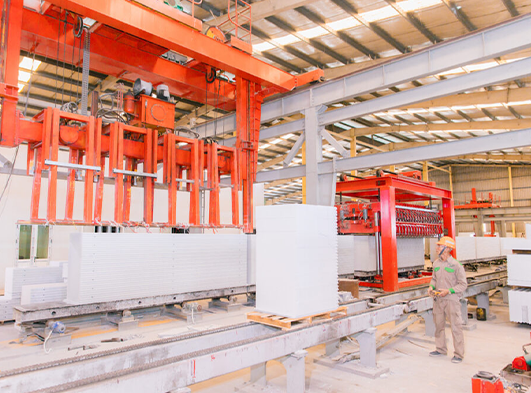
The second challenge was related to data. Historically, information about energy consumption, equipment operation, and specifications, etc., of the plant had not been systematically collected and stored, particularly in formats suitable for in-depth analysis. This significantly affected the progress of the energy audit and feasibility study process, as it took considerable time to review, supplement, or re-measure.
The most pressing challenge was related to financial resources. Some technically feasible solutions require substantial investments, creating challenges for the enterprise in balancing the potential for energy savings with economic efficiency and short-term capital mobilization capabilities.
Despite these challenges, we were reassured by the close cooperation from the program's experts. They provided not only technical advice and guidance but also demonstrated flexibility in adjusting proposed solutions to better suit our actual conditions and financial capabilities. Consequently, the difficulties were gradually resolved, allowing us to proceed with the subsequent steps smoothly and effectively.
"Green transformation" has been frequently mentioned recently, especially in the industrial sector—the highest energy-consuming sector in the economic structure. What significance do you see in participating in the Voluntary Agreement Scheme on Energy Efficiency for enterprises on the journey toward green transformation?
Mr. Vu Van Chien:
For us, green transformation is no longer a trend-based option – it is an inevitable requirement for survival and sustainable development in an increasingly regulated market concerning environmental, energy, and carbon emission standards. This is especially true in the building materials industry – where energy consumption and emissions are significant – transitioning to a model of production that is efficient, cost-effective, and environmentally friendly cannot be delayed.
Participating in the Voluntary Agreement Scheme on Energy Efficiency (VAS) represents a strategic step in this journey. The program has created a systematic framework and substantial support for enterprises, from identifying energy-saving opportunities and developing action plans to piloting solutions that align with actual conditions.
Through VAS, we not only access advanced energy-saving technologies but also learn to rethink our production processes – how to optimize operations, reduce waste, and improve overall efficiency. More importantly, we are gradually building an internal energy management system capable of adapting to domestic and international environmental requirements.
Green transformation cannot remain merely a slogan; it should begin with concrete actions. For Song Da Cao Cuong, participating in the VAS Program is indeed a practical step, marking the beginning of this long but crucial transformation process.
As a final question, after the support phase of the program concludes, does the company have any plans to maintain and expand the energy-saving results achieved?
Mr. Vu Van Chien:
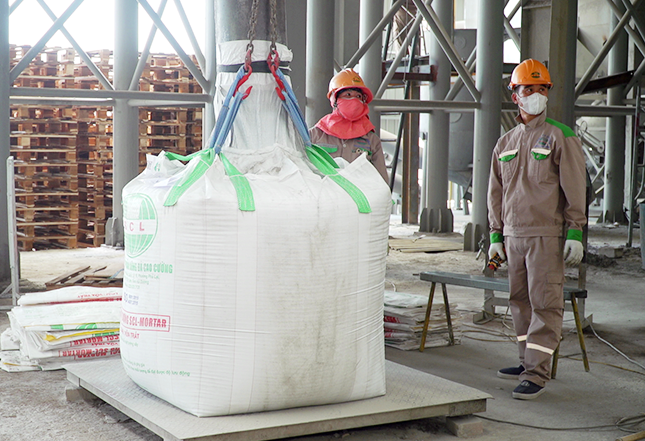
We recognize that energy saving is not just a short-term goal within the program framework but a long-term and continuous development strategy for the enterprise. Based on the results achieved from the initial phase, the company has developed a plan to maintain the internal energy management system, gradually integrating energy efficiency criteria into standard operating procedures.
Furthermore, we continue to invest in training and enhancing the capacity of our technical team—empowering them to be the core force in maintaining, monitoring, and proposing new energy-saving initiatives within the plant.
Particularly, based on the analyses and recommendations from experts in the Program, we are considering implementing Phase 2 investment solutions— which include upgrading equipment, optimizing operating systems, and gradually incorporating renewable energy sources. Moreover, we are seriously focusing on the carbon credit market in Vietnam—as we see this as a promising direction that contributes to emission reductions while opening up opportunities to enhance financial value from our green transformation efforts.
We believe that when a company truly changes from within, energy efficiency will not only be reflected in savings figures but will also evolve into a sustainable competitive advantage in the future.
Thank you for your specific and meaningful sharing. We wish Song Da Cao Cuong continued growth and to maintain its position as a leading enterprise in the field of green building materials production!
DEPP3 Program