The “key” to promoting energy efficiency
Thứ sáu, 10/04/2026 - 14:23
A lack of skilled human resources with in-depth expertise and modern thinking to systematically and effectively implement energy efficiency (EE) solutions - especially those that can convince key stakeholders such as banks and investors - remains a major barrier to advancing EE projects in Viet Nam.
Energy Efficiency: Where should enterprises begin?
Many industrial enterprises are well aware of the importance of energy efficiency in reducing costs, improving productivity, and meeting sustainability goals. However, a shortage of technical knowledge - from energy flow analysis, technological and financial risk assessment, to the development of pre-feasibility and feasibility studies - has prevented many promising EE projects from becoming reality.
Mr. Vu Van Chien, General Director of Song Da Cao Cuong JSC, shared: “Currently, in the process of implementing energy-saving solutions in general - and at Song Da Cao Cuong in particular - we face several challenges, especially in accessing in-depth technical support from experts. Specifically, the consulting services for EE solutions are still quite limited and do not fully meet the practical needs of enterprises seeking to improve energy performance.”
Similarly, at May Forestry JSC, despite the desire to act, barriers encountered during implementation have made the company hesitant. Mr. Nguyen The Mai, General Director of the company, said: “The first barrier we encountered was related to technology. In addition, awareness of energy efficiency among our staff and workers remains limited. Secondly, the current technical expertise of our engineers may not yet meet the necessary standards for effective implementation of EE measures.”
However, in reality, the issue lies not only with the enterprises but also with the capacity of the consulting firms. Many of them still lack the capability to produce high-quality technical and financial reports, making them unconvincing to financial institutions or banks when applying for funding for EE projects. These reports often lack quantitative backing, risk assessments, and clearly defined investment benefits - critical components when seeking access to green financing.
Therefore, developing a well-trained pool of experts who can consult, assess, and implement energy efficiency projects is truly the “key” to unlocking energy efficiency in Viet Nam.
Bridging the capacity gap
To address this issue, the Vietnam-Denmark Energy Partnership Programme for the period 2020 - 2025 (DEPP3) has launched a capacity-building program based on practical case studies in Vietnam, combined with the experience and expertise of Danish specialists. This was done to design and organize a specialized training program tailored for technical experts from EE consulting firms, universities, and research institutes representing all three regions of Vietnam.
The DEPP3 training program is delivered through a combination of theoretical and practical approaches, including training courses, workshops, technical seminars, and hands-on energy audits at industrial enterprises. The program involves the participation of energy audit companies, industrial enterprises, banks, financial institutions, and lecturers in the EE field.
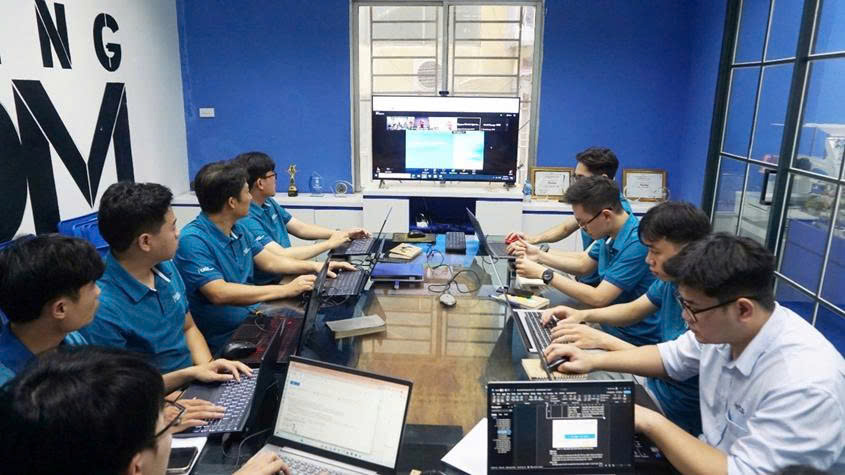
Trainees attend a seminar on using energy mapping tools - part of the DEPP3 capacity-building activities for stakeholders.
With the support of international experts, domestic specialists have had the opportunity to access advanced knowledge, methods, and tools in energy auditing, feasibility study development, and the assessment of technological and financial risks. This has not only improved their technical capacity but also contributed to the gradual formation of a high-quality consultancy force capable of accompanying businesses on their journey toward energy-efficient and sustainable production models.
Mr. Ma Khai Hien, Director of the Energy Conservation Research and Development Center (ENERTEAM), said: “Through the training sessions under DEPP3, we’ve not only updated our knowledge but also gained access to modern tools such as Energy Mapping. This is an extremely effective method for analyzing energy flows within factories, identifying waste, and proposing evidence-based improvements. More importantly, international experts have guided us on how to prepare feasibility reports with a financial-technical logic that aligns with banking standards.”
Sharing the same view, Mr. Nguyen Xuan Quang, Director of ENERVI Viet Nam Energy and Environment JSC, emphasized: “We highly value the training on investment benefit analysis and risk assessment. In the past, many local experts were strong on technical aspects but weak on financial analysis. Now, with formal training, we can produce reports that integrate both aspects, helping projects gain approval more easily.”
Mr. Jorgen Hvid, Long-Term Advisor from the DEPP3, commented: “The issue is not that enterprises lack ideas. Rather, they lack a ‘strong technical team’ to turn those ideas into properly structured, bankable projects. The current consulting force remains fragmented and lacks standardization.
We see great potential in Vietnam’s technical workforce, but what they need are the right tools and systematic thinking methods. DEPP3’s training is not just about technical knowledge - it’s about teaching systems thinking, how to integrate technical, financial, and human factors into an effective project.”
As of May 2025, over 150 stakeholders have benefited from the DEPP3’s training programs, including 55 energy auditors and 95 industry staff. The DEPP3 expects that through intensive training courses, participants will not only enhance their professional knowledge and gain exposure to modern evaluation tools and methods, but also engage directly with experienced international experts. This marks an important step toward building a high-quality workforce that meets increasing market demands and accelerates the effective implementation of energy-saving projects nationwide.
DEPP3 Program